Talking about prenups or cohabitation agreements can feel scary. It can also feel unromantic. Many couples worry if these agreements are needed or if they show a lack of trust. The legal terms can also be confusing. Rights for common-law partners differ, which adds to the stress.
But these agreements are not about doubt. They are about clarity, fairness, and peace of mind. They help you understand your money, your assets, and what each partner expects
This guide explains what these agreements do and what they don’t. It will help you protect your property, set clear financial rules, and build a stronger future together.
Understanding Common-Law Relationships
A common-law relationship is when two people live together as partners but aren’t legally married. You share daily life, act like a couple, and build your home together. But there’s no marriage certificate.
These relationships don’t look the same everywhere. Every country, state, or province has its own rules. It’s important to check the laws where you live before making any assumptions.
Most places use a few basic signs to decide if a couple is common-law. You may need to live together for a certain time. You might share money, bills, or a home. Some couples raise children together. Many also present themselves publicly as partners.
How Common-Law Rights Are Changing
The rules around common-law couples are not fixed. They have shifted a lot over the years. Some regions now offer more protection for partners. Others still keep the rights very limited. These changes are one reason many couples choose to make clear agreements.
Legal Rights and Duties in Common-Law Unions
Common-law partners often don’t get the same automatic rights as married couples do. Property, inheritance, or support after a breakup may not be guaranteed. The rules depend on where you live.
In some places, long-term partners get rights almost equal to married couples. In other areas, nothing happens unless you take legal steps.
This can leave people unsure about what counts as shared property, who owns what or what happens to debt. That’s why knowing your local laws is so important. Every region handles prenups, cohabitation agreements, and common-law rights differently, so it’s worth double-checking your area’s rules.
What These Agreements Can Cover
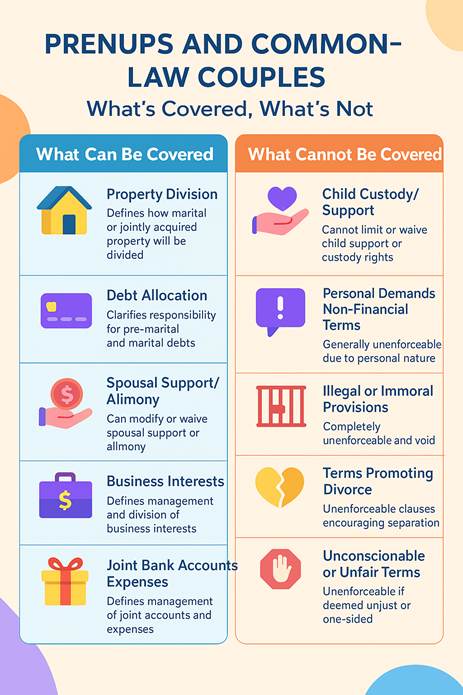
Prenups and cohabitation agreements cover a lot more than people think. They help you sort out money matters, protect what you own and plan for the future. They also set expectations for things like career changes, home responsibilities, and long-term goals. This gives both partners a clearer picture of what life together will look like.
Property and Assets
These agreements can explain who owns what. They can protect things you had before the relationship. They can also spell out what happens to anything you buy together. This is especially useful for common-law couples, since automatic property rules often don’t apply.
Debts
You can use these agreements to make sure you’re not stuck with your partner’s old debt. They also decide who pays for new debt taken on during the relationship. It keeps both sides safe and avoids messy problems later.
Spousal Support
Some couples choose to set rules for support if they ever split up. Others decide to waive it. What you can or can’t do depends on local laws, but it’s something many couples include.
Business Interests
If one of you owns a business, the agreement can protect it. It can also tell you what happens if your partner helps with the business. Simply put, a prenup clearly sets out rules to protect both the company and the relationship.
Inheritances and Gifts
These agreements can make sure gifts or family inheritances stay yours. People use them to protect family property and special items that matter to them.
Joint Accounts and Shared Costs
You can set rules for how joint accounts work. You can also decide how you’ll split bills, rent or groceries. Clear plans make day-to-day life much easier.
Pets
Many couples add pet plans. You can decide who keeps the pet if you separate and who pays for vet visits. It avoids heartache later.
Future Changes
Life doesn’t stay the same, and your agreement doesn’t have to either. You can include times to review it, such as when you move, have kids, or make major financial changes.
These examples show what couples often include, but every situation is different. The more specific and detailed the agreement is, the better it protects both partners. Laws also vary widely, so it’s always smart to check your local rules or speak with a legal professional.
What These Agreements Can’t Cover
Prenups and cohabitation agreements have limits. Some things can’t be controlled by a contract, no matter what you write down. If a scenario like that unfolds, courts have to intervene and follow basic rules to protect fairness, safety, and public policy.
Child-Related Decisions
You can’t use these agreements to decide child support or custody. The court always puts the child’s best interests first. Any clause trying to avoid support or limit parenting rights won’t count.
Personal Rules
You can’t enforce personal behavior in a legal agreement. Things like chores, weight, intimacy, or lifestyle habits are not legally binding. These are private matters, not legal ones.
Illegal or Immoral Terms
Anything involving illegal activity or unethical behavior is automatically invalid. Courts won’t accept clauses that hide crimes or promote harmful conduct.
Clauses That Encourage Separation
You can’t add terms that reward divorce or push the relationship to end. These go against public policy and won’t hold up in court.
Unfair or One-Sided Terms
If a clause is extremely unfair or made without proper disclosure, it may be thrown out. Agreements must be reasonable, clear, and made without pressure.
Limits on Basic Rights
You can’t take away someone’s freedom of speech, religion, or other basic rights. These rights can’t be restricted in a relationship contract.
Overall, these agreements help with money and property, not personal control or anything that harms fairness.