You’ve probably heard of a prenuptial agreement or prenup, but knowing what it is and knowing whether you actually need one are two very different things. While a prenup defines how assets and debts are handled, deciding whether it’s right for you depends on your unique situation, financial objectives, and level of trust and transparency within your relationship.
What a Prenup Is?
As discussed, a prenup is simply a legal deal a couple makes before getting married. It’s a written agreement that explains what will happen to their money, property, and debts if they ever split up or if one of them passes away.
Benefits of Prenup
Before we discuss whether you really need a prenuptial agreement, let’s examine what makes it useful. Knowing the perks can help you figure out if signing one makes sense for you or not.
Financial Clarity and Peace of Mind
A prenup in Ontario helps couples stay on the same page about money. It clarifies confusion about who owns what and who’s responsible for debts. It also explains how things will be handled if life takes an unexpected turn. When everything is clear from the start, there’s less room for misunderstandings later on.
Less Conflict, Less Stress
Nobody wants to think about arguments or breakups, but having a prenup can prevent them. It reduces the chances of messy fights over money and helps both partners avoid lengthy and expensive court conflicts. In short, it’s a calm plan for uncertain times.
Protecting What’s Already Yours
If you own property, run a business, or have investments before marriage, a prenup helps protect them. It also keeps personal inheritances or gifts separate, so they stay with the person they were meant for.
Building Trust Through Honesty
Talking about a prenup can feel awkward, but it’s a great way to strengthen your relationship. It opens up honest discussions about finances, expectations, and future goals. Think of it as a sign of respect and transparency, not a lack of trust.
Personalized to Fit Your Relationship
Every couple is different, and a prenuptial agreement can reflect that. It can be adjusted to your lifestyle, financial situation, and shared goals, rather than relying on standard legal rules that may not suit you.
Only around 8% of Canadian couples have a prenup, but more people, especially millennials are starting to get interested. Even with a pretty high divorce rate (about 38% of marriages end in divorce), not many couples are getting one yet.
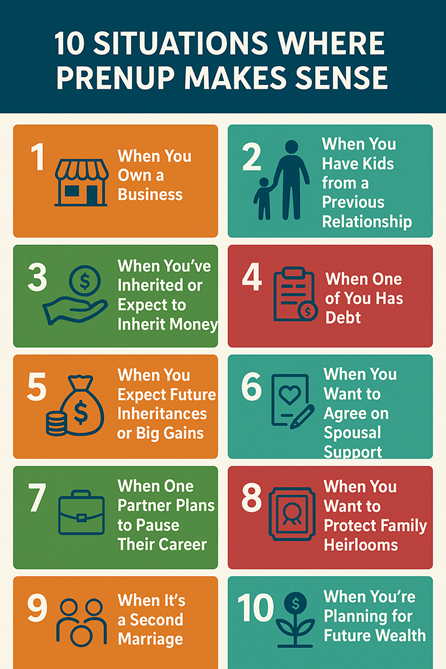
10 Times a Prenup Can Be a Smart Move
When people hear the word prenup, they often think it’s only for rich people. However, it’s not actually what they believe. There are plenty of real-life situations where it becomes essential to make a prenuptial agreement. It’s not about expecting things to go wrong; instead, it’s about being prepared, practical, and honest about money. Below are some everyday examples where having a prenup can actually save a lot of stress later.
1. When You Own a Business
If you built your own business before marriage, a prenup can help keep it safe. Getting married can sometimes blur the lines between what belongs to one partner and what belongs to both.
Entrepreneurs should consider a prenup as a form of business insurance. It protects the company and keeps ownership stable.
2. When You Have Kids from a Previous Relationship
If you already have children, it’s normal to want to protect their inheritance. A prenup can make sure your kids get what you intend for them. For example, a widower with two adult children is marrying again but wants to ensure his children still receive his estate. A prenup can clearly set that out, avoiding family disputes later on.
3. When You’ve Inherited or Expect to Inherit Money
Let’s say you’ve received a trust fund or some family property. Without a prenup, that inheritance could accidentally become shared property. A prenuptial agreement allows both partners to mutually decide how inherited money will be handled.
4. When One of You Has Debt
Money isn’t just about what you own; it’s also about what you owe. If one partner comes into the marriage with big student loans or credit card debt, a prenup can keep the other from being dragged into it. You can clearly state in the prenuptial agreement whether one person’s debt remains their own responsibility or is shared.
5. When You Expect Future Inheritances or Big Gains
Sometimes, people haven’t yet received their inheritance but know they’ll inherit money, a family business stake, or a major financial gift in the future. A prenup can outline how that money will be handled.
6. When You Want to Agree on Spousal Support
A prenuptial agreement can help couples decide in advance how spousal support, also known as alimony, will be handled if they ever separate. Instead of leaving the decision to the court, both partners can discuss and agree on fair terms while things are calm and cooperative.
You can talk about whether anyone will pay spousal support, how much it might be, and for how long. It’s not about being negative; it’s about being practical and ensuring both of you are on the same page from the start.
7. When One Partner Plans to Pause Their Career
If one of you plans to take a break from work, such as to raise children, attend school, or support the other’s career, a prenup can help protect that partner financially.
When someone steps back from their job, they may lose income, savings, or future career growth opportunities. A prenup can outline how that sacrifice will be recognized later, especially if the relationship ends. It can include things like financial support, shared savings, or property division to make sure both partners stay secure and respected for the roles they play in the relationship.
8. When You Want to Protect Family Heirlooms
Not all valuable things have a price tag. Maybe there’s a vintage piano, artwork, or jewelry that’s been in your family for generations. A prenup can ensure that sentimental items stay with you or your family, regardless of what happens in the future.
Prenup is less about protection and more about teamwork, building trust through clear communication.
9. When It’s a Second Marriage
If you’ve been married before, you probably understand how complicated divorce can get, emotionally and financially. A prenup can bring peace of mind by clearly outlining what’s yours, what’s shared, and how things will work if life takes an unexpected turn. Robert and Susan, both divorced once before, agreed on a prenup to avoid repeating old mistakes and to protect their kids from previous marriages.
10. When You’re Planning for Future Wealth
Even if you don’t have much now, you might earn or save a lot together later. A prenup can make it clear how money, savings, or property you get during marriage will be shared.